
Subaru Telescope's Breakthrough: Unveiling a Brown Dwarf and Distant Exoplanet
Discoveries by Subaru Telescope: A brown dwarf and an exoplanet potentially aiding upcoming space missions.

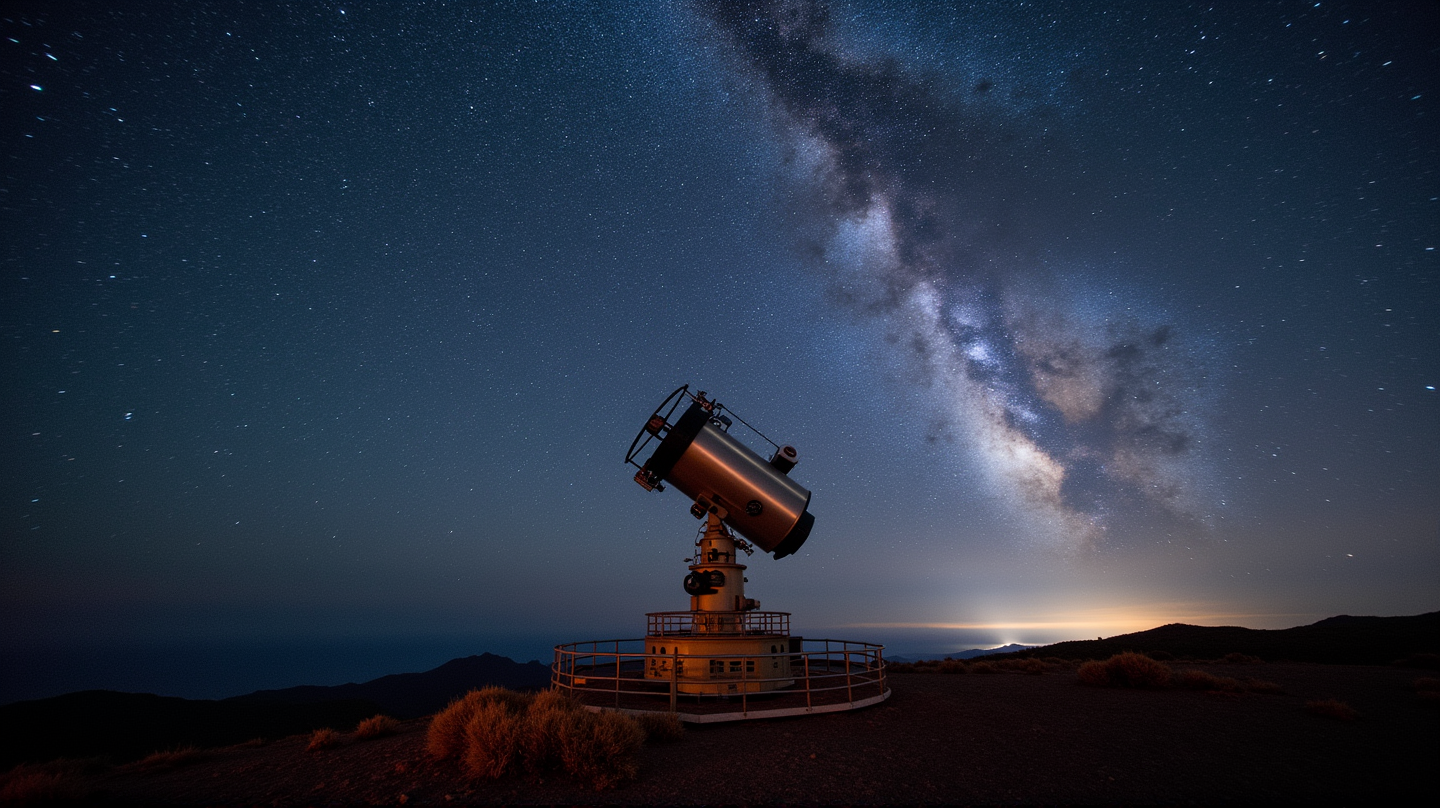
Unveiling the Cosmos from Hawaii
In an awe-inspiring leap for space exploration, astronomers using Japan’s Subaru Telescope in Hawaii have unveiled two remarkable celestial objects: a distant exoplanet and a ‘failed star’ known as a brown dwarf. These celestial bodies, though light-years away, offer new windows into the mysteries of our universe.
Discovering a ‘Failed Star’
The term ‘failed star’ might sound like an understatement, but the brown dwarf labeled HIP 71618 B is far from insignificant. Located around 169 light-years away in the Bootes constellation, it defies categorization between a planet and a star. Brown dwarfs form similarly to stars but lack the mass required for nuclear fusion. This particular discovery is poised to play a crucial role in testing NASA’s Nancy Grace Roman Space Telescope, as stated by the National Astronomical Observatory of Japan (NAOJ).
Unlocking New Worlds
Meanwhile, in the Leo constellation, a massive exoplanet known as HIP 54515 b has been found. Positioned approximately 271 light-years from Earth, this exoplanet is nearly 18 times the mass of Jupiter. With its orbit akin to Neptune’s distance from our Sun, it presents an exciting opportunity to study planetary formation and dynamics beyond our solar system.
A Celestial Alchemy
The combination of measurements from the European Space Agency’s Hipparcos and Gaia missions, along with data from the OASIS program, enabled these extraordinary discoveries. The Subaru Telescope’s precise observations are a testament to the power of international scientific collaboration and the relentless pursuit to understand the universe’s vastness.
Future Prospects
According to Space, NASA’s upcoming Roman Space Telescope aims to photograph Earth-like planets, a feat made possible by the precise calibrations provided by studying brown dwarfs such as HIP 71618 B. This exploration could pave the way for observing exoplanets hardened by the glow of their stars’ light.
A New Chapter in Exploration
These initial findings from the Subaru Telescope not only underscore the telescope’s capabilities but also hint at the vast reserves of knowledge awaiting us in the stellar realm. As we edge closer to these distant worlds, the promise of uncovering unprecedented cosmic truths seems more tantalizing than ever.
This uncharted frontier symbolizes humanity’s relentless curiosity and the ever-present dream of unfurling the secrets of the stars.