
Germany Poised to Make Moon Landing History for Europe
Germany is set to make history by sending the first European astronaut to the Moon, marking a monumental leap in space exploration under NASA’s Artemis program.

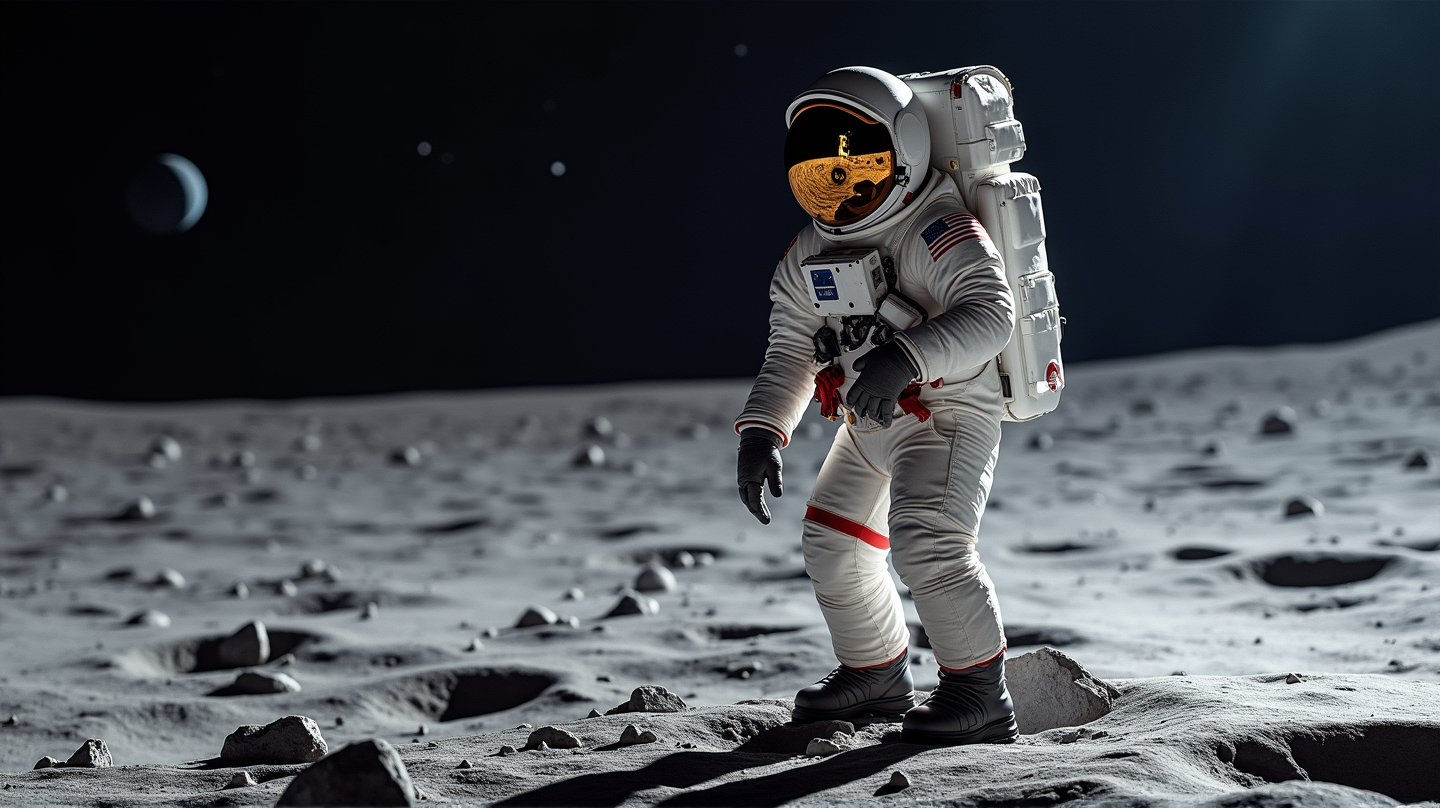
Germany stands on the brink of making history by sending the very first European astronaut to the Moon. This unprecedented moment is set to unfold under NASA’s Artemis program, showcasing a leap forward in international collaboration in space exploration.
A Pioneering Leap for Europe
This monumental mission represents Europe’s bold step into lunar exploration with Germany at the helm. Artemis 4 will potentially see German astronauts Matthias Maurer or Alexander Gerst at the forefront, both of whom have extensive experience from past missions aboard the International Space Station. Their journey is testament to Europe’s commitment to advancing human spaceflight and extending beyond the boundaries of current exploration capabilities. According to The Daily Galaxy, this mission signals Europe’s climbing prominence in the global space race, elevating its status in the realm of deep-space exploration.
The Moon Mission: A First for Europe
Germany’s Federal Minister for Research, Technology, and Space, Dorothee Bär, expressed her excitement about the historic venture, emphasizing the unique perspective a European astronaut will gain by traveling a staggering 360,000 kilometers from Earth. “This journey will allow a European to see the Earth as no preceding Europeans have,” she remarked, highlighting the trip’s potential to shift perceptions and inspire future endeavors.
ESA’s Integral Role
The European Space Agency (ESA) plays a critical role in this mission by collaborating with NASA. Providing integral infrastructure such as the European Service Module for the Orion spacecraft, ESA’s contributions are vital. Developed in Bremen, Germany, this module will supply power, propulsion, and more, ensuring mission success and reinforcing ESA’s pivotal role in lunar missions and beyond.
Looking to the Future
Beyond Artemis 4, ESA is eyeing the lunar gateway project, a collaborative effort with NASA to establish a space station in lunar orbit. This ambitious initiative stands at the threshold of sustainable human space exploration beyond low Earth orbit. Daniel Neuenschwander, ESA’s Director for Human and Robotic Exploration, emphasizes future collaboration, indicating the United States may seek continued partnership with ESA for further advances in space module technology.
In conclusion, Germany’s lead in sending the first European astronaut to the Moon signifies a giant leap for Europe in space exploration. With the ESA’s sustained commitment and collaboration with NASA, the future looks bright for even greater achievements. This momentous occasion marks not only a new era in European space exploration but also a triumph of international cooperation in reaching for the stars.